The first aid exam consists of two components. One section is a one hundred question written exam. The questions on the written exam will be based on the current edition of Na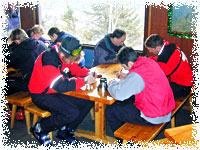 tional Ski Patrol’s "Outdoor Emergency Care" manual. A passing grade for the exam is 85%. The second section is a practical exam consisting of several stations that will be set up on the hill or in a "clinic" environment. Each candidate can expect to go to some stations with a partner and some alone. Each pair of candidates will need one sled with the first aid equipment necessary for treating patients at each of the stations. If a candidate does not have a partner then one will be assigned to the candidate at the exam. This candidate must still bring a sled and appropriate equipment. PSPA reserves the right to disallow any questionable device. Discussion about the stations between candidates during the exam will constitute an unquestionable failure. Bystanders and/or examiners can be instructed to
 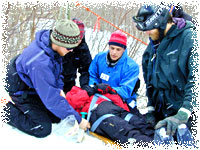 assist in non-critical maneuvers. The examiners at each station will be observing the candidates professionalism, confidence, scene management, first aid, patient loading and transport. Notification by a hypothetical radio to the appropriate authority should be made as soon as it is realized that a patient requires care by a patroller. Information about the incident will be gathered through questions asked of the patient or bystander(s).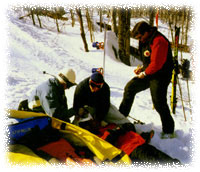
The stations may include, but are not limited to: long board, long bone fracture, patient assessment, airway management, upper/lower extremity injuries and internal injuries. The stations may include scenarios with multiple injuries and/or multiple patients.